


Introduction
Are you looking to register a trademark in Nigeria? Understanding the classification system is your first crucial step toward protecting your brand identity. Nigeria, like most countries worldwide, adopts the Nice Classification System – an international standard that organizes goods and services into 45 distinct classes.
This comprehensive guide will walk you through each class, helping you identify exactly where your products or services belong. Whether you’re a startup founder, an established business owner, or a legal professional, this guide will serve as your definitive reference.
What is the Nice Classification System?
The Nice Classification, established by the Nice Agreement (1957), is an international system used to classify goods and services for trademark registration purposes. Nigeria, as a member of the World Intellectual Property Organization (WIPO), follows this standardized system through the Trademarks Act administered by the Nigerian Trademarks, Patents and Designs Registry.
Why does this matter? When you register a trademark, you must specify which class(es) your goods or services fall under. Selecting the correct class ensures comprehensive protection for your brand.
Classes 1-34: Goods
The Product Categories

Image: Manufacturing facility representing goods classification
Class 1: Industrial Chemicals
Function: Covers chemicals used in industry, science, photography, agriculture, horticulture, and forestry.
Examples include:
- Unprocessed artificial resins
- Unprocessed plastics
- Fertilizers and manures
- Fire extinguishing compositions
- Tempering and soldering preparations
- Chemical substances for preserving foodstuffs
- Tanning substances
- Adhesives used in industry
Who needs this? Chemical manufacturers, agricultural supply companies, industrial suppliers, and photography chemical producers.
Class 2: Paints and Coatings
Function: Encompasses paints, varnishes, lacquers, and protective coatings against rust and wood deterioration.
Examples include:
- Paints and varnishes
- Lacquers
- Rust preservatives
- Wood preservatives
- Colorants and dyes
- Mordants (dye fixatives)
- Raw natural resins
- Metals in foil and powder form for painters, decorators, and artists
Who needs this? Paint manufacturers, coating companies, art supply businesses, and wood treatment companies.
Class 3: Cosmetics and Cleaning Preparations
Function: Covers non-medicated cosmetics, toiletries, and cleaning substances.
Examples include:
- Bleaching preparations for laundry
- Cleaning and polishing substances
- Abrasives
- Soaps and detergents
- Perfumery and essential oils
- Non-medicated cosmetics
- Non-medicated hair lotions
- Non-medicated dentifrices (toothpaste)
Who needs this? Beauty brands, skincare companies, cleaning product manufacturers, and personal care businesses.

Image”Cosmetic products representing Class 3
Class 4: Industrial Oils and Fuels
Function: Encompasses industrial oils, greases, lubricants, fuels, and illuminants.
Examples include:
- Industrial oils and greases
- Lubricants
- Dust absorbing and wetting compositions
- Fuels (including motor spirit)
- Illuminants (lighting fuels)
- Candles and wicks for lighting
Who needs this? Oil and gas companies, lubricant manufacturers, candle makers, and fuel distributors.
Class 5: Pharmaceuticals and Medical Preparations
Function: Covers pharmaceutical and veterinary preparations, as well as sanitary products.
Examples include:
- Pharmaceutical preparations
- Veterinary preparations
- Sanitary preparations for medical purposes
- Dietetic food and substances for medical use
- Food for babies
- Dietary supplements
- Plasters and bandages
- Disinfectants
- Fungicides and herbicides
Who needs this? Pharmaceutical companies, healthcare brands, baby food manufacturers, and medical supply companies.
Class 6: Common Metals and Metal Goods
Function: Encompasses common metals and their alloys, as well as metal building materials.
Examples include:
- Common metals and their alloys
- Metal building materials
- Transportable metal buildings
- Metal cables and wires (non-electric)
- Ironmongery and small metal hardware
- Metal pipes and tubes
- Safes and strongboxes
- Metal ores
Who needs this? Metal fabricators, construction material suppliers, hardware manufacturers, and mining companies.
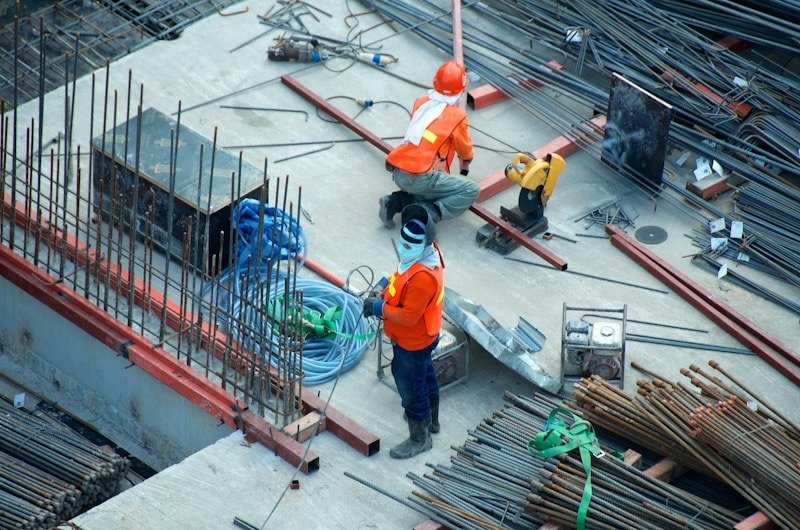
Image: Metal construction materials representing Class 6
Class 7: Machinery
Function: Covers machines, machine tools, and motors (except for land vehicles).
Examples include:
- Machines and machine tools
- Motors and engines (except for land vehicles)
- Machine coupling and transmission components
- Agricultural implements (other than hand-operated)
- Incubators for eggs
- Automatic vending machines
Who needs this? Manufacturing equipment companies, agricultural machinery producers, and industrial equipment suppliers.
Class 8: Hand Tools
Function: Encompasses hand-operated tools and implements, cutlery, and razors.
Examples include:
- Hand tools and implements (hand-operated)
- Cutlery
- Side arms (swords, bayonets)
- Razors
- Scissors
- Garden tools
- Manicure instruments
Who needs this? Tool manufacturers, kitchen utensil brands, personal grooming companies, and garden equipment suppliers.
Class 9: Scientific and Electrical Apparatus
Function: Covers scientific, nautical, surveying, and electrical apparatus and instruments.
Examples include:
- Scientific and research apparatus
- Nautical and surveying instruments
- Photographic and cinematographic equipment
- Optical apparatus and instruments
- Weighing and measuring devices
- Signaling apparatus
- Computers and software
- Fire-extinguishing apparatus
- Smartphones and electronic devices
Who needs this? Technology companies, software developers, electronics manufacturers, and scientific equipment suppliers.

Image: Electronic devices representing Class 9
Class 10: Medical Apparatus
Function: Encompasses surgical, medical, dental, and veterinary apparatus and instruments.
Examples include:
- Surgical instruments
- Medical apparatus and instruments
- Dental apparatus
- Veterinary instruments
- Artificial limbs, eyes, and teeth
- Orthopedic articles
- Suture materials
- Massage apparatus
- Hearing aids
Who needs this? Medical device manufacturers, dental equipment companies, prosthetics makers, and healthcare equipment suppliers.
Class 11: Environmental Control Apparatus
Function: Covers apparatus for lighting, heating, steam generating, cooking, refrigerating, drying, ventilating, and water supply.
Examples include:
- Lighting apparatus and installations
- Heating equipment
- Steam generating apparatus
- Cooking appliances
- Refrigerating equipment
- Drying apparatus
- Ventilating systems
- Air conditioning installations
- Water supply and sanitary installations
Who needs this? HVAC companies, kitchen appliance manufacturers, lighting companies, and plumbing fixture producers.
Class 12: Vehicles
Function: Encompasses vehicles and apparatus for locomotion by land, air, or water.
Examples include:
- Automobiles and motor vehicles
- Motorcycles and bicycles
- Aircraft
- Ships and boats
- Railway vehicles
- Vehicle parts and accessories
- Tires and wheels
- Baby carriages and strollers
Who needs this? Automotive companies, bicycle manufacturers, aerospace companies, and vehicle parts suppliers.
Class 13: Firearms and Explosives
Function: Covers firearms, ammunition, projectiles, and explosives.
Examples include:
- Firearms
- Ammunition and projectiles
- Explosives
- Fireworks
- Pyrotechnic products
Who needs this? Arms manufacturers, ammunition producers, mining explosives companies, and fireworks manufacturers.
Class 14: Precious Metals and Jewelry
Function: Encompasses precious metals, jewelry, horological and chronometric instruments.
Examples include:
- Precious metals and their alloys
- Jewelry and precious stones
- Horological instruments (watches, clocks)
- Chronometric instruments
- Costume jewelry
- Cufflinks and tie pins
- Key rings and key chains
Who needs this? Jewelry brands, watch manufacturers, precious metal dealers, and accessory companies.
Class 15: Musical Instruments
Function: Covers musical instruments and their accessories.
Examples include:
- Musical instruments of all types
- Piano and keyboard instruments
- String instruments
- Wind instruments
- Percussion instruments
- Electronic musical instruments
- Musical instrument cases and stands
- Music stands
Who needs this? Musical instrument manufacturers, music equipment companies, and accessory producers.
Class 16: Paper Goods and Printed Matter
Function: Encompasses paper, cardboard, printed matter, and office requisites.
Examples include:
- Paper and cardboard
- Printed matter (books, magazines, newspapers)
- Bookbinding materials
- Photographs and stationery
- Adhesives for stationery
- Artists’ materials
- Paintbrushes
- Typewriters and office equipment (except furniture)
- Instructional materials
- Plastic packaging materials
Who needs this? Publishing houses, stationery brands, office supply companies, and packaging manufacturers.
Class 17: Rubber and Insulation Materials
Function: Covers rubber, gutta-percha, gum, asbestos, mica, and related products.
Examples include:
- Unprocessed and semi-processed rubber
- Gutta-percha and gum
- Asbestos and mica
- Plastics in extruded form for manufacture
- Packing and stopping materials
- Insulating materials
- Flexible pipes (not of metal)
- Hoses
Who needs this? Rubber manufacturers, insulation material producers, and industrial material suppliers.
Class 18: Leather Goods
Function: Encompasses leather, imitation leather, and goods made from these materials.
Examples include:
- Leather and imitation leather
- Animal skins and hides
- Trunks and traveling bags
- Umbrellas and parasols
- Walking sticks
- Whips and saddlery
- Handbags and purses
- Wallets and briefcases
Who needs this? Fashion brands, luggage manufacturers, leather goods companies, and accessory designers.
Class 19: Non-Metallic Building Materials
Function: Covers building materials not made of metal.
Examples include:
- Building materials (non-metallic)
- Non-metallic rigid pipes for building
- Asphalt, pitch, and bitumen
- Non-metallic transportable buildings
- Monuments (non-metallic)
- Stone, concrete, and cement
- Bricks and tiles
- Wood for building purposes
Who needs this? Construction material companies, building suppliers, and architectural element manufacturers.
Class 20: Furniture and Furnishings
Function: Encompasses furniture, mirrors, picture frames, and goods made from wood, cork, or plastics.
Examples include:
- Furniture
- Mirrors and picture frames
- Goods made of wood, cork, reed, cane, or wicker
- Goods made of bone, ivory, or shell
- Plastic goods (not in other classes)
- Bedding (mattresses, pillows)
- Sleeping bags for camping
Who needs this? Furniture manufacturers, home décor brands, bedding companies, and interior design suppliers.
Class 21: Household Utensils
Function: Covers household and kitchen utensils and containers.
Examples include:
- Household utensils and containers
- Kitchenware
- Combs and sponges
- Brushes (except paintbrushes)
- Brush-making materials
- Cleaning articles
- Glassware and porcelain
- Unworked glass (except for building)
Who needs this? Kitchenware brands, home goods companies, cleaning product manufacturers, and glassware producers.
Class 22: Ropes and Textile Materials
Function: Encompasses ropes, strings, nets, tents, and raw textile fibers.
Examples include:
- Ropes and string
- Nets
- Tents and tarpaulins
- Awnings
- Sails
- Sacks and bags for packaging
- Padding and stuffing materials
- Raw fibrous textile materials
Who needs this? Rope manufacturers, camping equipment companies, packaging material suppliers, and textile material producers.
Class 23: Yarns and Threads
Function: Covers yarns and threads for textile use.
Examples include:
- Yarns for textile use
- Threads for textile use
- Sewing threads
- Embroidery threads
- Knitting yarns
Who needs this? Yarn manufacturers, thread producers, and textile supply companies.
Class 24: Textiles and Textile Goods
Function: Encompasses textiles and substitutes for textiles, as well as household textile articles.
Examples include:
- Textiles and textile substitutes
- Bed covers and table covers
- Curtains and drapes
- Bed linens
- Towels
- Flags and banners
- Textile wall hangings
Who needs this? Textile manufacturers, bedding brands, home textile companies, and flag makers.
Class 25: Clothing and Footwear
Function: Covers clothing, footwear, and headgear.
Examples include:
- All types of clothing
- Footwear (shoes, boots, sandals)
- Headgear (hats, caps)
- Sportswear
- Underwear and lingerie
- Formal wear
- Children’s clothing
- Uniforms
Who needs this? Fashion brands, clothing manufacturers, shoe companies, and accessory designers.
Class 26: Haberdashery and Trimmings
Function: Encompasses lace, embroidery, ribbons, and haberdashery items.
Examples include:
- Lace and embroidery
- Ribbons and braids
- Buttons and hooks
- Pins and needles
- Artificial flowers
- Hair decorations
- Wigs and false hair
- Zippers and fasteners
Who needs this? Fashion accessory companies, sewing supply manufacturers, and haberdashery suppliers.
Class 27: Floor Coverings
Function: Covers carpets, rugs, mats, and wall hangings (non-textile).
Examples include:
- Carpets and rugs
- Mats and matting
- Linoleum and other floor coverings
- Wall hangings (non-textile)
- Wallpaper
- Artificial turf
Who needs this? Flooring companies, carpet manufacturers, and interior décor brands.
Class 28: Games and Sporting Goods
Function: Encompasses games, toys, and sporting articles.
Examples include:
- Games and playthings
- Toys
- Video game apparatus
- Gymnastic and sporting articles
- Christmas tree decorations
- Playing cards
- Fishing tackle
- Hunting equipment
Who needs this? Toy manufacturers, sporting goods companies, gaming equipment producers, and recreational product brands.
Class 29: Processed Foods (Animal Products)
Function: Covers meat, fish, poultry, and processed foods derived from animals.
Examples include:
- Meat, fish, and poultry
- Game (wild animals as food)
- Preserved, frozen, dried, and cooked fruits and vegetables
- Jellies and jams
- Eggs and milk
- Dairy products (cheese, butter, yogurt)
- Edible oils and fats
Who needs this? Food processing companies, dairy brands, meat producers, and preserved food manufacturers.
Class 30: Processed Foods (Plant-Based)
Function: Encompasses coffee, tea, cocoa, rice, flour, and related food products.
Examples include:
- Coffee, tea, and cocoa
- Sugar and rice
- Tapioca and sago
- Flour and cereal preparations
- Bread, pastries, and confectionery
- Ice cream and ices
- Honey and treacle
- Yeast and baking powder
- Salt and mustard
- Vinegar and sauces
- Spices
Who needs this? Bakeries, confectionery companies, beverage brands, spice manufacturers, and food producers.
Class 31: Agricultural Products
Function: Covers raw agricultural, horticultural, and forestry products.
Examples include:
- Raw agricultural products
- Horticultural and forestry products
- Grains and seeds
- Fresh fruits and vegetables
- Live animals
- Fresh plants and flowers
- Animal foodstuffs
- Malt
Who needs this? Agricultural companies, pet food manufacturers, seed companies, and fresh produce suppliers.

Image: Agricultural products representing Class 31
Class 32: Beverages (Non-Alcoholic)
Function: Encompasses beers and non-alcoholic beverages.
Examples include:
- Beers
- Mineral and aerated waters
- Non-alcoholic beverages
- Fruit beverages and juices
- Syrups for making beverages
- Energy drinks
- Sports drinks
Who needs this? Beverage companies, juice manufacturers, water brands, and soft drink producers.
Class 33: Alcoholic Beverages
Function: Covers alcoholic beverages (except beers).
Examples include:
- Wines
- Spirits and liquors
- Alcoholic cocktails
- Liqueurs
- Whiskey, vodka, rum, and gin
- Cider and perry
Who needs this? Distilleries, wineries, spirit brands, and alcoholic beverage producers.
Class 34: Tobacco Products
Function: Encompasses tobacco, smokers’ articles, and matches.
Examples include:
- Tobacco
- Cigars and cigarettes
- Electronic cigarettes
- Smokers’ articles
- Matches
- Lighters
- Ashtrays
- Cigarette papers
Who needs this? Tobacco companies, smoking accessories manufacturers, and related product producers.
Classes 35-45: Services
The Service Categories

Image: Professional business services
Class 35: Advertising and Business Services
Function: Covers advertising, business management, business administration, and office functions.
Examples include:
- Advertising and marketing services
- Business management consulting
- Business administration
- Office functions and secretarial services
- Retail and wholesale services
- Market research
- Public relations
- Import and export agencies
- Franchise services
Who needs this? Marketing agencies, business consultants, retail chains, HR companies, and management firms.
Class 36: Financial and Insurance Services
Function: Encompasses insurance, financial affairs, monetary affairs, and real estate services.
Examples include:
- Insurance services
- Banking and financial services
- Monetary affairs
- Real estate services
- Investment services
- Fundraising and sponsorship
- Debt collection
- Valuation services
Who needs this? Banks, insurance companies, investment firms, real estate agencies, and financial advisors.

Image: Financial and banking services representing Class 36
Class 37: Construction and Repair Services
Function: Covers building construction, repair, and installation services.
Examples include:
- Building construction
- Repair and maintenance services
- Installation services
- Mining and oil extraction
- Cleaning of buildings
- Vehicle repair and maintenance
- Clothing repair
- Computer hardware installation
Who needs this? Construction companies, repair services, installation contractors, and maintenance firms.
Class 38: Telecommunications Services
Function: Encompasses telecommunications and communication services.
Examples include:
- Telecommunications services
- Broadcasting services
- Cable television services
- Internet service provision
- Message sending
- Video conferencing services
- Streaming services
- Electronic mail services
Who needs this? Telecom companies, internet service providers, broadcasting companies, and communication platforms.
Class 39: Transportation and Storage Services
Function: Covers transport, packaging, and storage of goods.
Examples include:
- Transportation services
- Packaging and storage of goods
- Travel arrangement services
- Courier services
- Freight brokerage
- Vehicle rental
- Tour operator services
- Warehouse storage
Who needs this? Logistics companies, travel agencies, shipping firms, and storage facilities.
Class 40: Treatment of Materials
Function: Encompasses treatment of materials including processing, transformation, and custom manufacturing.
Examples include:
- Material treatment and processing
- Custom manufacturing
- Food and drink preservation
- Textile treatment
- Metal treating
- Printing services
- Energy production
- Waste treatment and recycling
Who needs this? Manufacturing services, print shops, food processing services, and recycling companies.
Class 41: Education and Entertainment Services
Function: Covers education, training, entertainment, sporting, and cultural activities.
Examples include:
- Education and training services
- Entertainment services
- Sporting activities
- Cultural activities
- Publishing services
- Film production
- Event organization
- Fitness training
- Museum services
Who needs this? Schools, entertainment companies, sports organizations, publishers, and event planners.
Class 42: Scientific and Technological Services
Function: Encompasses scientific and technological services, research, and design.
Examples include:
- Scientific research
- Technological services
- Industrial analysis
- Software development
- Computer programming
- Website design
- Engineering services
- Quality control
- Cloud computing
Who needs this? Tech companies, research institutions, engineering firms, and software developers.

Image: Technology and software development representing Class 42
Class 43: Food and Accommodation Services
Function: Covers services for providing food and drink, as well as temporary accommodation.
Examples include:
- Restaurant services
- Hotel services
- Temporary accommodation
- Catering services
- Café and bar services
- Food preparation
- Boarding house services
- Event catering
Who needs this? Restaurants, hotels, catering companies, bars, and hospitality businesses.
Class 44: Medical and Agricultural Services
Function: Encompasses medical, veterinary, hygienic, and agricultural services.
Examples include:
- Medical services
- Veterinary services
- Hygienic and beauty care
- Agriculture and horticulture services
- Pharmacy services
- Health spa services
- Nursing care
- Pet grooming
Who needs this? Hospitals, clinics, veterinary practices, spas, salons, and agricultural service providers.
Class 45: Legal and Security Services
Function: Covers legal services, security services, and personal and social services.
Examples include:
- Legal services
- Security services
- Personal and social services
- Detective agencies
- Intellectual property licensing
- Wedding planning
- Funeral services
- Online social networking
Who needs this? Law firms, security companies, social service organizations, and licensing agencies.
Quick Reference Table
| Class | Category | Primary Focus |
|---|---|---|
| 1-34 | Goods | Physical products |
| 35-45 | Services | Intangible services |
Goods Summary (Classes 1-34)
| Class Range | General Category |
|---|---|
| 1-5 | Chemicals, Paints, Cosmetics, Fuels, Pharmaceuticals |
| 6-10 | Metals, Machinery, Tools, Electronics, Medical Devices |
| 11-15 | Appliances, Vehicles, Firearms, Jewelry, Instruments |
| 16-20 | Paper, Rubber, Leather, Building Materials, Furniture |
| 21-25 | Household Items, Ropes, Yarns, Textiles, Clothing |
| 26-30 | Haberdashery, Flooring, Games, Food Products |
| 31-34 | Agriculture, Beverages, Alcohol, Tobacco |
Services Summary (Classes 35-45)
| Class | Service Category |
|---|---|
| 35 | Advertising and Business |
| 36 | Financial and Insurance |
| 37 | Construction and Repair |
| 38 | Telecommunications |
| 39 | Transportation and Storage |
| 40 | Material Treatment |
| 41 | Education and Entertainment |
| 42 | Scientific and Technology |
| 43 | Food and Accommodation |
| 44 | Medical and Agricultural |
| 45 | Legal and Security |
Key Considerations for Nigerian Trademark Registration
1. Multiple Class Registration
Many businesses require registration in multiple classes. For example:
- A fashion brand might need Classes 18, 25, and 35
- A technology company might need Classes 9, 35, 42, and 45
- A restaurant chain might need Classes 29, 30, 43, and 35
2. Fees Structure
In Nigeria, trademark fees are typically charged per class. Budget accordingly if your business spans multiple categories.
3. Comprehensive Protection
Consider both your current products/services AND future expansion plans when selecting classes.
4. Professional Guidance
Given the complexity of the classification system, consulting with a trademark attorney or intellectual property specialist is highly recommended.
The Registration Process in Nigeria
- Conduct a Trademark Search – Check for existing similar marks
- Identify Appropriate Classes – Use this guide to determine relevant classes
- Prepare Application – Complete required forms and documentation
- Submit to Registry – File with the Nigerian Trademarks Registry
- Examination – Registry reviews your application
- Publication – Mark published in Trademarks Journal
- Opposition Period – 60 days for third-party objections
- Registration – Certificate issued upon successful completion
Conclusion
Understanding Nigeria’s 45 trademark classes is fundamental to protecting your brand effectively. Whether you’re manufacturing products or providing services, correctly identifying your class ensures your intellectual property receives the comprehensive protection it deserves.
The Nice Classification System provides a standardized framework that simplifies international trademark registration and helps businesses expand across borders with consistent protection.
Remember: Trademark protection is an investment in your brand’s future. Take the time to understand these classifications, and when in doubt, seek professional guidance to ensure your valuable intellectual property is fully protected.
Need Help with Trademark Registration?
If you’re planning to register a trademark in Nigeria, consider consulting with:
- Intellectual Property Attorneys
- Trademark Agents
- The Nigerian Trademarks, Patents and Designs Registry
Protect your brand today for a secure business tomorrow.
Disclaimer: This article provides general information about trademark classification in Nigeria. It does not constitute legal advice. For specific guidance on trademark registration, please consult with a qualified intellectual property professional.